When people look for reflexology benefits, they are usually looking for a clearer answer than a foot chart can give them. They want to know what a session may feel like, whether it is a sensible way to unwind, and whether the experience is likely to fit their comfort level. Those are good questions. The most useful answer is grounded in the actual appointment, not a dramatic promise.
What people usually mean by reflexology benefits
Reflexology is a foot-focused wellness practice that uses measured pressure across selected areas of the feet. Some traditions also include the hands or ears. The traditional framework connects these areas with other parts of the body, which is why reflexology is often discussed in much bigger terms than a typical foot massage.
For a person considering a session, the more practical benefits are often simpler. You may enjoy having your feet receive undivided attention. You may appreciate a slower pace after a day of standing, commuting, caregiving, or wearing shoes that have made your feet feel tired. You may simply want a calm hour where the pressure can be adjusted around what feels good.
That is different from saying that reflexology cures a health problem. The National Center for Complementary and Integrative Health describes reflexology as a complementary practice and notes that there is not convincing evidence that it is an effective treatment for medical conditions. Keeping that distinction clear protects you from exaggerated claims while leaving room to value a restful, focused experience.
It also helps you choose the right kind of appointment. If you want careful attention below the knee, a quiet setting, and the option to guide the pressure as you go, reflexology may be worth exploring. If you want broad work through your back, shoulders, legs, or arms, a wider massage service may make more sense.

A quieter way to make room for yourself
One of the most honest benefits of reflexology is the pause itself. Feet are easy to overlook because they keep carrying you through the day. A foot-focused appointment asks you to stop moving for a while, settle into a chair or treatment table, and let someone work at a pace that does not need to be rushed.
That kind of attention can feel especially welcome when you have been on your feet for work, travel, errands, exercise, or a long day at home. The experience is not a test of how much pressure you can tolerate. It is a chance to notice whether slower touch, a quieter room, and a little time away from the next task help you feel more at ease.
The details matter. You can ask for a low-conversation appointment, lighter pressure, extra support under your legs, or less focus on an area that feels sensitive. You can also say that your feet are simply tired and you are not looking for anything intense. A thoughtful practitioner should treat that feedback as useful direction.
This is often why reflexology appeals to people who are unsure about a full-body massage. The scope is clear. You remain clothed, remove your shoes and socks, and begin with the part of the body that has likely done a great deal of work already. For some people, that contained format makes it easier to relax into hands-on care.
Focused foot care can feel restorative
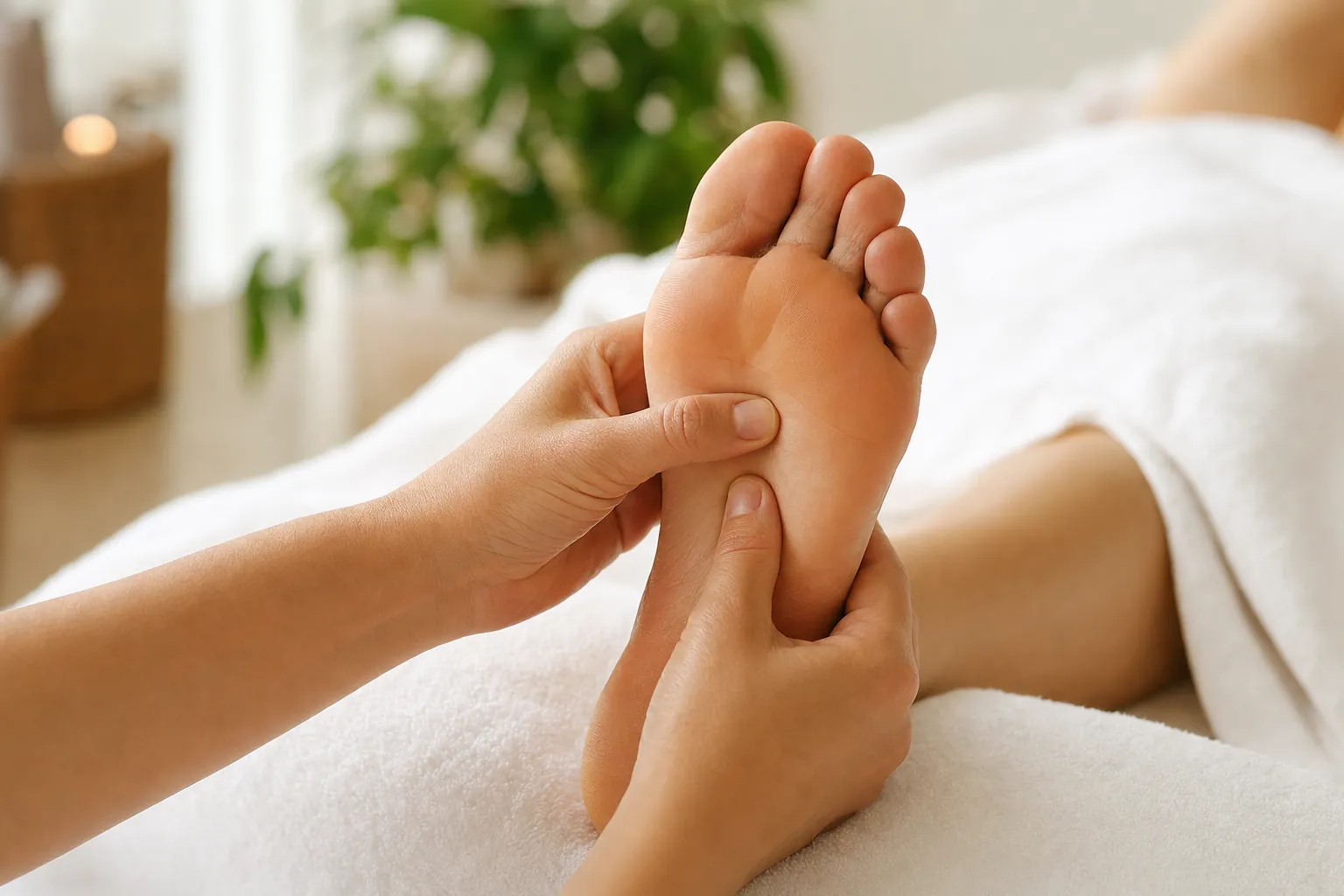
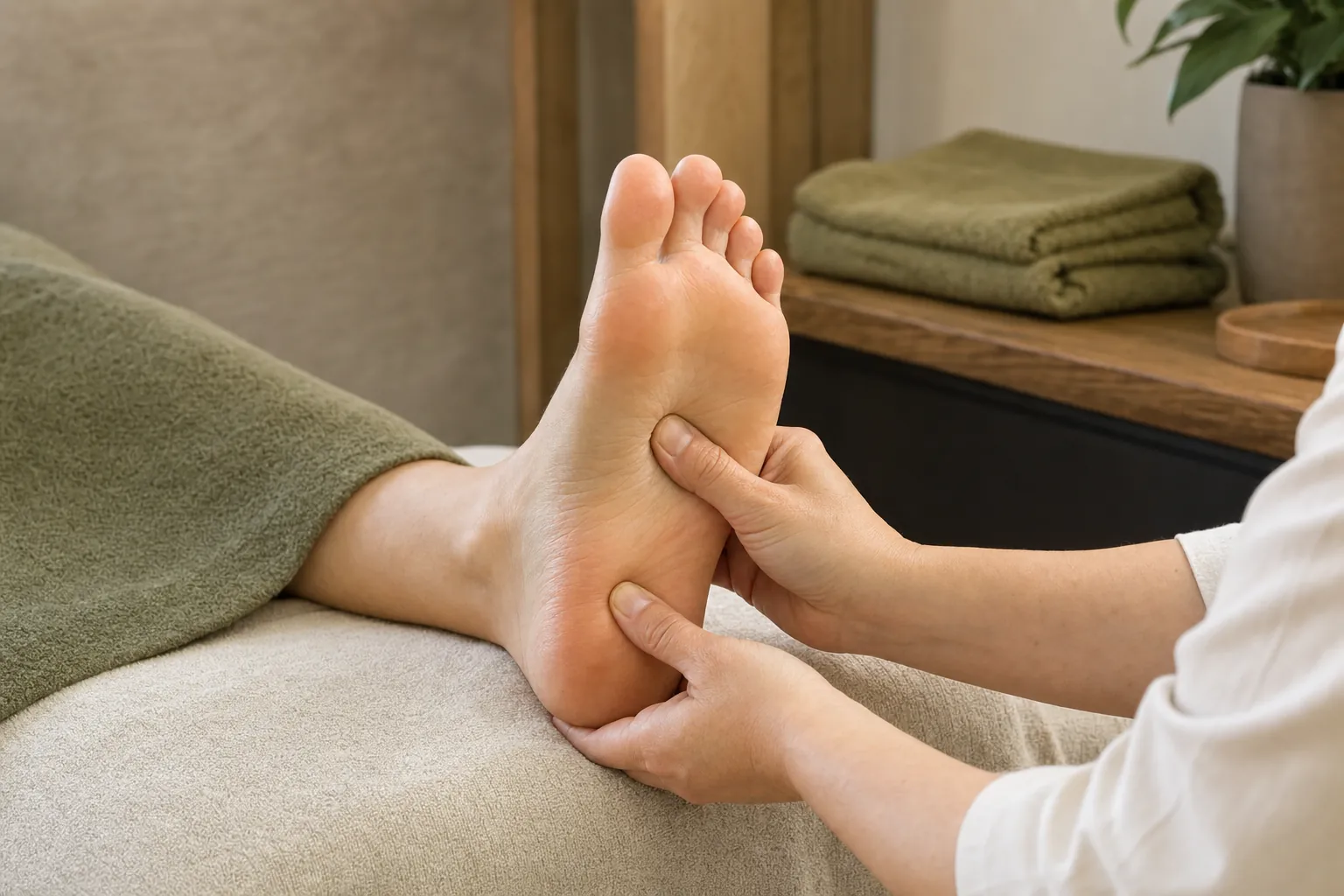
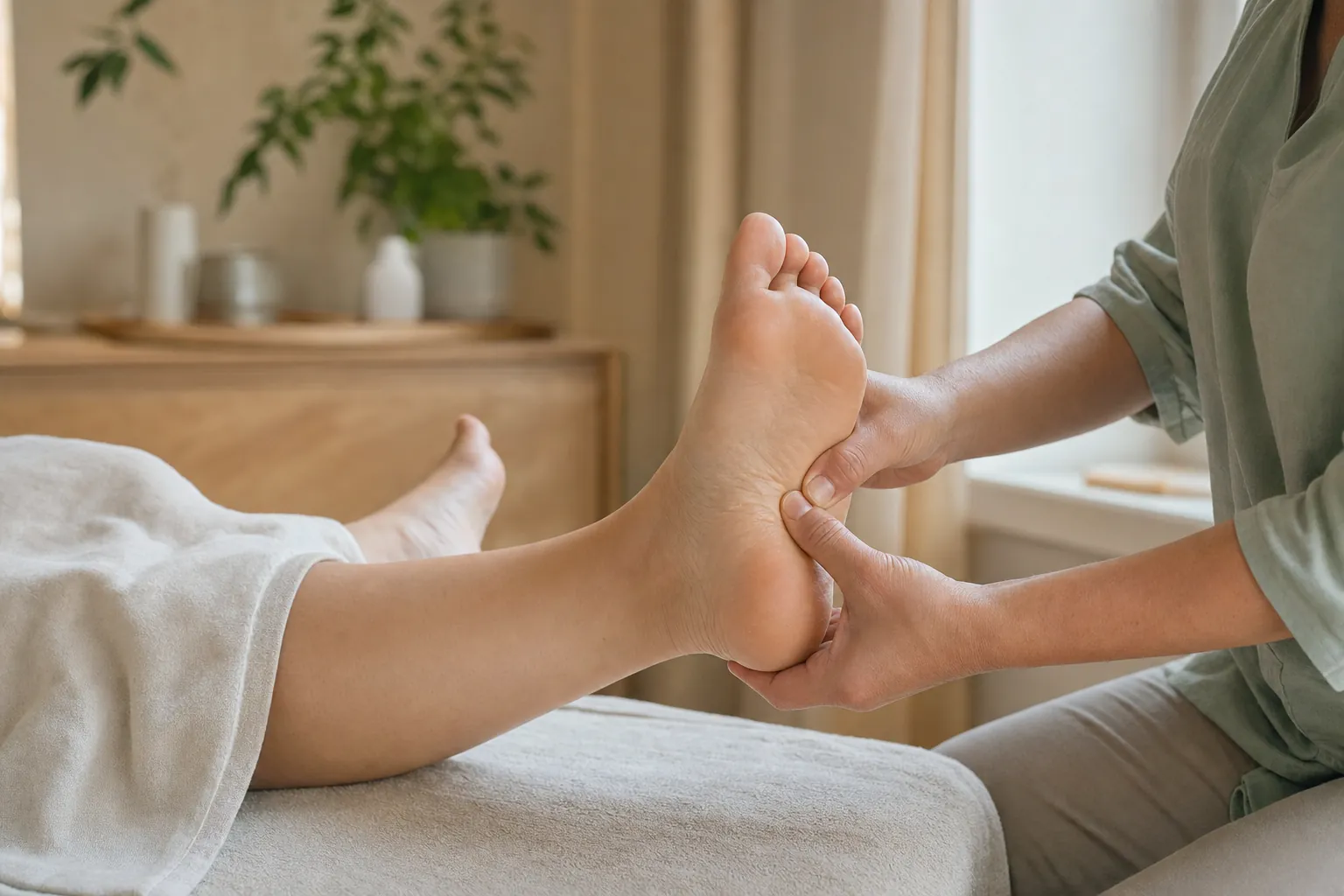
There is a practical difference between having your feet touched briefly as part of a larger service and choosing an appointment centered on them. Reflexology generally moves with a more deliberate rhythm. A practitioner may hold the foot steady, warm it with broader touch, then use thumbs and fingers to work gradually around the heel, arch, ball of the foot, and toes.
That specificity can make the session feel attentive. Instead of working through several areas of the body quickly, the appointment can stay with one smaller area and adapt from there. You may prefer a light, soothing touch. You may enjoy firmer pressure in one area and less in another. Neither preference is more correct. The useful pressure is the pressure that lets you remain comfortable.
It is also reasonable to enjoy this kind of care without attaching a diagnosis to every tender spot. Feet can feel sensitive for ordinary reasons: long periods on hard floors, a new walking routine, exercise, tight shoes, dry skin, or simply the way your body feels that day. A tender arch does not tell a practitioner what is happening in an internal organ, and it does not need to become a story about what is wrong with you.
If you are still deciding whether the focused style is right for you, the reflexology and foot massage comparison explains how the two experiences differ. It can help you choose based on the kind of touch and scope you actually want, rather than choosing by the largest promise.

The benefit of being able to guide the pressure
A good reflexology appointment is not passive in the sense that you have no say. You do not need to know the names of techniques or point locations to participate. Plain language is enough. "A little lighter," "my left foot is more sensitive today," and "can we stay there for a moment?" all give a practitioner meaningful information.
That communication can make the experience more comfortable from the beginning. Rather than waiting until pressure is unpleasant, share your preferences during the opening conversation. Mention any area you would rather avoid, whether you prefer a very quiet session, and whether you have had recent soreness. There is no prize for staying silent through discomfort.
Clear feedback is especially helpful for people who worry that their feet are too ticklish, too sensitive, or too tired for a foot-focused service. These are not unusual concerns. A session can begin gently and change as you learn what feels settling. If you decide the style is not right for you that day, that is useful information too.
When an appointment makes room for adjustment, it can feel less like a preset treatment and more like care shaped around the person in the room. That is a real benefit of seeking a private wellness service rather than trying to force yourself into a one-size-fits-all experience.
How reflexology compares with a broader massage
Reflexology and massage can both offer a welcome pause, but they place attention differently. Reflexology stays centered on the feet and usually works in smaller, more deliberate movements. A broader massage can move through larger areas such as the back, shoulders, legs, and arms, with the feet included as one part of the whole. The better fit depends on what you want your appointment to focus on that day.
Choose reflexology when your feet are the area you most want to settle, when a contained appointment sounds appealing, or when you prefer to begin with focused care below the knee. Choose broader massage when your feet are only one part of a larger feeling of tension or when warmth and full-body attention sound more restorative. You do not need to make the choice perfectly from a page. A clear description of what feels tired, tender, or overdue for attention is enough to begin a useful conversation.
For many people, this is the simplest way to think about the possible benefit: reflexology offers a specific kind of focused touch, while a broader massage offers a wider scope. Neither service needs to be sold as a medical solution. A good appointment gives you a comfortable setting, clear boundaries, and enough room to say what you would like more or less of.
What research can and cannot say
It is fair to be curious about research, especially because reflexology is often marketed with claims about specific organs, diseases, sleep, stress, or pain. The evidence does not support using reflexology as a way to diagnose a condition or replace medical care. A foot map is not medically established anatomy, and a sensitive point is not a reliable sign that another part of your body needs treatment.
The research on complementary care can be difficult to summarize because studies use different techniques, settings, and outcomes. A person may report that a session felt calming or comforting, but that personal response is not the same thing as proof of treatment for an illness. The NCCIH's reflexology overview is a useful starting point because it separates the tradition of the practice from claims that overreach the evidence.
This does not mean you have to dismiss the experience. A wellness appointment can be worth your time because you enjoy focused touch, a private setting, and a chance to slow down. The important part is choosing it for what it can honestly offer. That leaves you free to enjoy a soothing session without delaying an evaluation for pain, swelling, numbness, an injury, or another symptom that needs clinical attention.
For that same reason, be cautious when anyone says a particular reflex point proves that an organ is unhealthy or promises to fix a medical problem. Responsible care has room for warmth and confidence without pretending that it can answer questions meant for a clinician.
When to pause before a session
Wellness care is not right for every situation or every day. It is sensible to wait or ask a clinician first if you have a recent fracture, open wound, active gout, a circulation condition, blood-clot concerns, severe swelling, significant numbness, or a new symptom that has not been evaluated. Pregnancy, diabetes-related foot concerns, neuropathy, and active medical treatment are also good reasons to get clear guidance before hands-on foot work.
The University of Minnesota's reflexology safety guidance outlines several situations where caution is appropriate. This is not about making an appointment feel complicated. It is about recognizing that a relaxation-focused service should never pressure you to ignore a concern that deserves a proper medical assessment.
If your question is simply about comfort or availability, it is fine to ask before booking. If your question is about an injury, new pain, loss of sensation, a wound, or a condition you are managing, a clinician is the right first conversation. You can return to the idea of reflexology later, when you have guidance that makes the choice feel clear.

What you may notice after reflexology
There is no special recovery routine you need to follow after a foot-focused session. Many people appreciate a few unhurried minutes, comfortable shoes, and a glass of water before shifting back into the day. You may notice that you liked the pressure in some areas more than others, or that next time you would prefer more quiet, a slower pace, or broader massage work instead.
Those observations can make a future appointment easier to personalize. They are more useful than trying to interpret every sensation through a foot chart. Feeling relaxed, sleepy, or simply ready to get on with your plans can all be ordinary responses to taking a break. If you feel sharp pain or notice a symptom that concerns you, treat that concern with the same care you would outside a wellness appointment and speak with a clinician.
The value of the session does not need to be dramatic. Sometimes the best result is that you had a calm hour, your feet received careful attention, and you left with a better sense of what kind of care feels good to you. That is enough.
How Massages by Sierra approaches reflexology
At Massages by Sierra, reflexology is offered as a private, foot-focused wellness session with room for clear communication. The aim is not to make medical promises or ask you to endure pressure that does not feel right. It is to offer careful touch, a quieter setting, and a pace that can be adjusted around your comfort.
Review the reflexology massage details if you are considering a focused foot session. If you would rather explore a broader direction, the therapeutic massage page and the full services page can help you compare what is available. You can also use the contact page to ask a straightforward question before requesting a session.
Frequently asked questions
Questions before you book
What are the benefits of reflexology?
People often choose reflexology for focused attention on the feet, a quiet break from a busy day, and a chance to relax with pressure adjusted to their comfort. These are experience-based wellness benefits, not a promise to diagnose or treat a medical condition.
Can reflexology reduce stress?
A calm, hands-on session may help some people feel more settled in the moment. Your response will be personal, and it is best to think of reflexology as a wellness service rather than treatment for anxiety, stress-related illness, or another health condition.
Should reflexology hurt to work?
No. Some areas can feel tender, especially when your feet are tired or sensitive, but sharp pain is not the goal. Tell the practitioner when you would like lighter pressure, a slower pace, or less time in one area.
Can reflexology replace medical care?
No. Reflexology is complementary wellness care. It cannot diagnose a condition, replace a medical evaluation, or take the place of care recommended by your clinician.
When should I ask a clinician before booking?
Ask first if you have a recent foot injury, open wound, active gout, circulation or blood-clot concerns, significant numbness, diabetes-related foot concerns, pregnancy, or active medical treatment. A new, severe, or worsening symptom deserves medical guidance before a wellness session.