Reflexology point charts can look wonderfully precise: a heel labeled for one area of the body, an arch for another, and small zones across the toes. The useful part is understanding what those charts are meant to represent. They are a traditional way of organizing a foot-focused session, not a medical map of your body.
What are reflexology points?
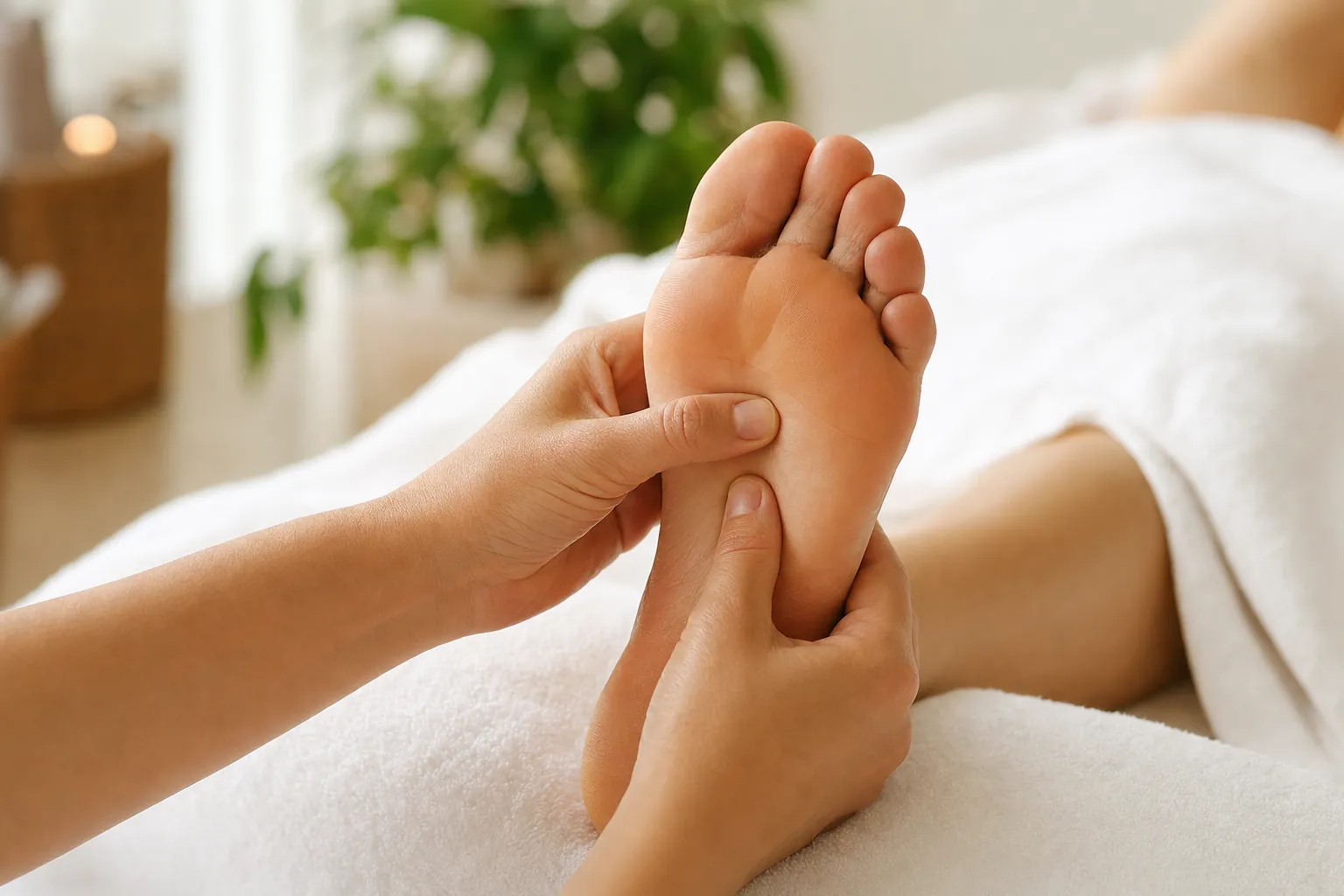
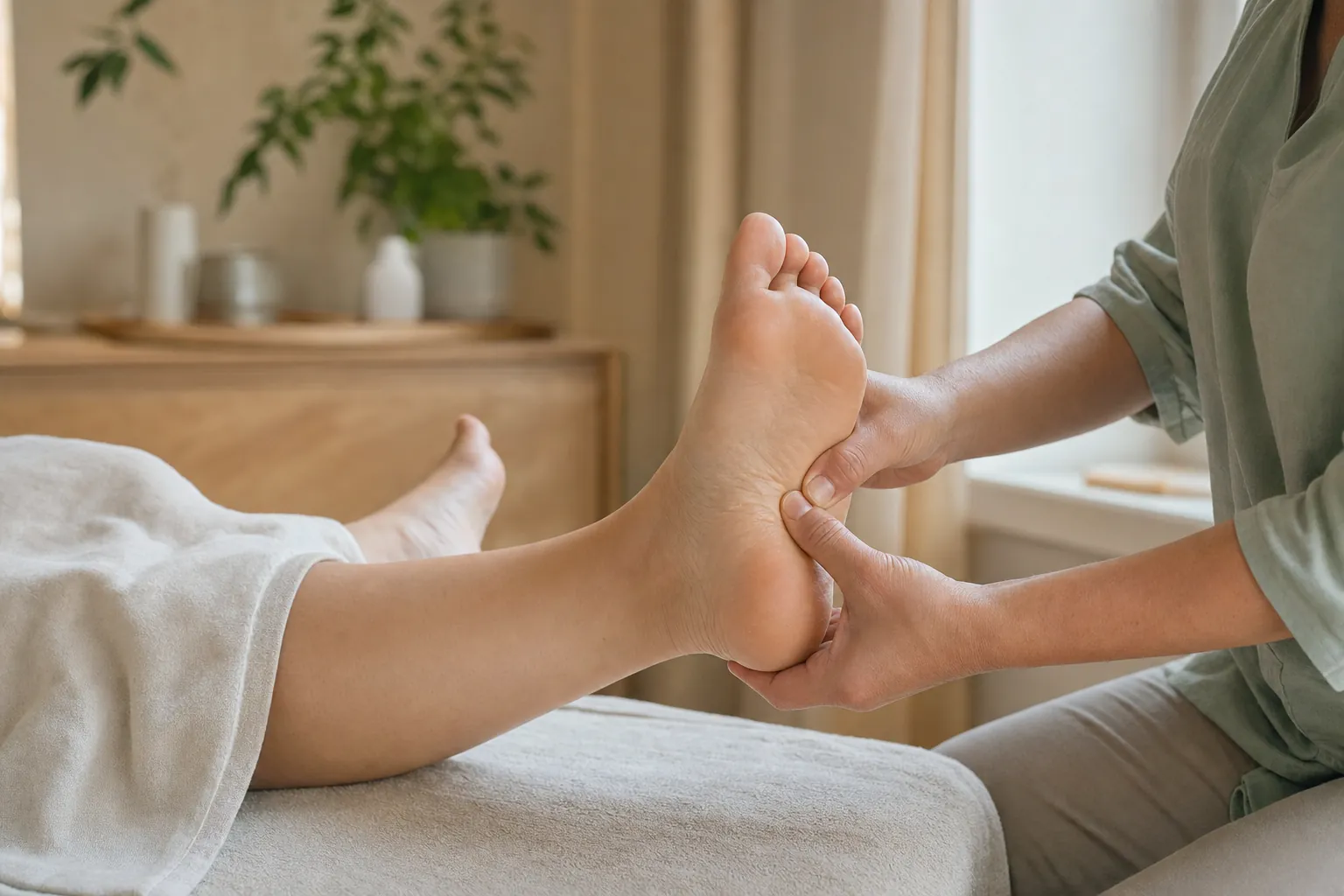
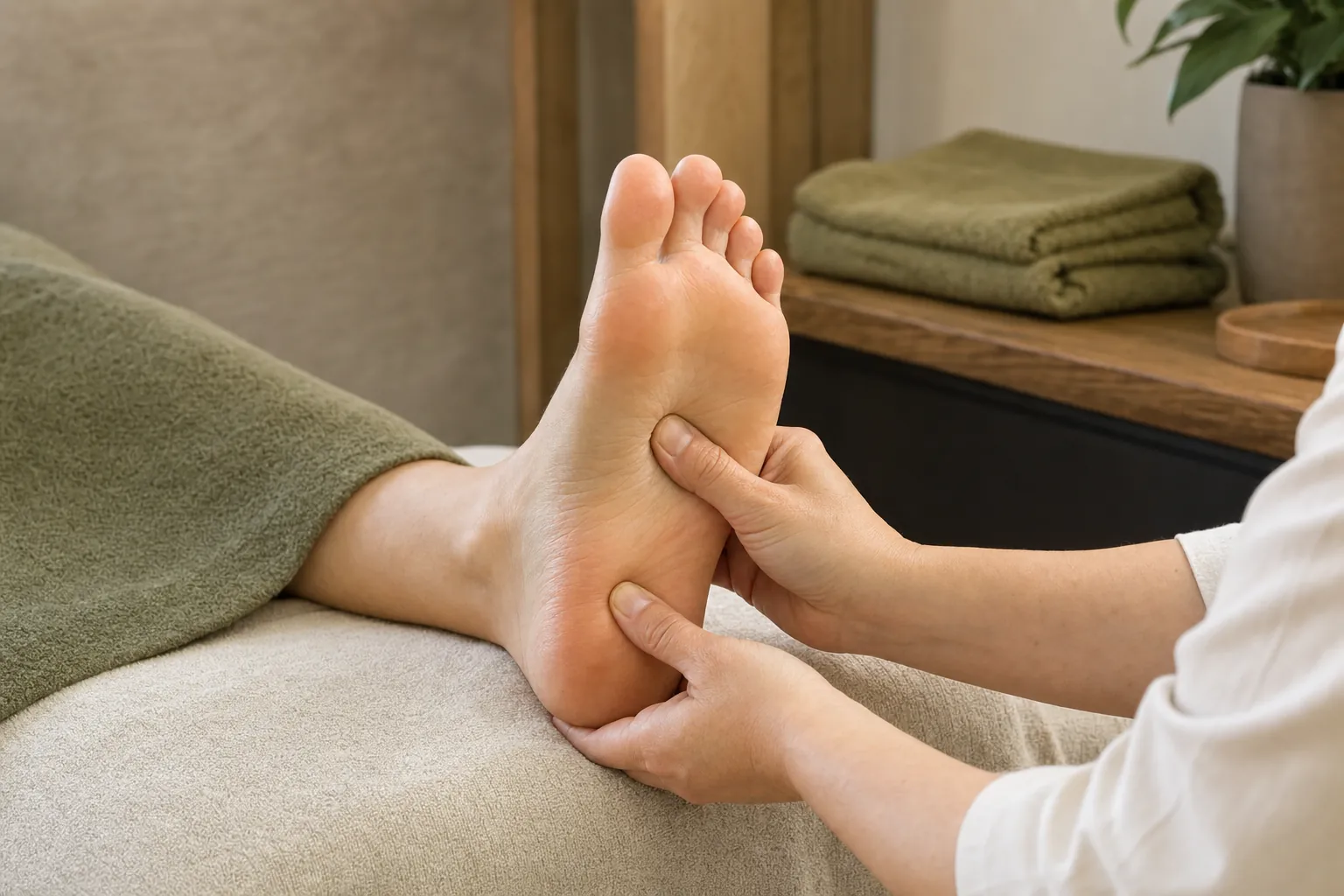
In reflexology, practitioners use a mapped-point framework. The feet, hands, and ears are divided into areas that traditions associate with other parts of the body. A session may move deliberately through the heel, arch, ball of the foot, and toes, using thumbs and fingers to apply measured pressure.
That framework gives reflexology its particular feel. Instead of broad kneading everywhere at once, the practitioner may pause at smaller areas and work with a slow, repeated rhythm. For many people, that focused attention is the main appeal. It can make a session feel more contained and intentional than a casual foot rub.
The National Center for Complementary and Integrative Health describes reflexology as a practice based on the idea that points on the feet, hands, and ears correspond to other parts of the body. That is an explanation of the tradition, not confirmation that those points are established anatomy.
So, if you see a chart that connects the arch of the foot with an internal organ, it is best to read it as part of reflexology’s own language. It can explain how a practitioner may organize pressure during a session. It cannot tell you that an organ is unhealthy, prove why you feel discomfort, or replace a medical evaluation.

Why reflexology maps can feel convincing
Feet are sensitive. They carry body weight, spend hours inside shoes, and absorb a lot of input from standing, walking, exercise, and hard surfaces. When someone presses a specific spot and you notice tenderness, it is natural to wonder whether that spot is revealing something larger.
But tenderness is not a diagnostic signal. Pressure can feel different from one day to the next. A spot might be sensitive because you have been on your feet, your shoes have been tight, you recently increased activity, or you simply do not enjoy firm touch in that area. Our brains are also good at finding meaning in a detailed chart when a sensation appears to match a label.
A clear explanation is more useful than a dramatic one. Reflexology charts are not validated medical tools, and a practitioner should not use them to announce that a particular body system is out of balance. If a health concern needs an answer, the right next step is a clinician who can evaluate symptoms using appropriate medical methods.
This boundary does not make the session less worthwhile. It simply keeps the value honest. You can enjoy careful, attentive pressure around your feet without being asked to treat the experience as a diagnosis.
What a point-by-point session actually feels like
A reflexology session usually begins with a brief check-in. You can share that your feet are sensitive, that you prefer lighter pressure, or that there is an area you would rather avoid. You remain clothed, remove your shoes and socks, and settle into a comfortable seated or reclining position while the work stays focused on the feet.
The practitioner may warm the foot with broader touch, then use thumbs and fingers to move slowly through smaller areas. There may be a pause at the heel, a deliberate pass along the arch, gentle work around the ball of the foot, and careful pressure near the toes. The pace tends to be quieter and more specific than a general foot massage.
You do not need to memorize a chart before booking. The more useful preparation is knowing what you want from the appointment: a break after time on your feet, a quieter session, gentle pressure, or focused attention below the knee. Those preferences tell a practitioner much more about how to make the experience comfortable than a map ever could.

How to decide whether reflexology is what you want
Start with the kind of attention that would feel good, not the claim that sounds most impressive. Reflexology may be a good fit when you want a session focused on your feet, enjoy measured pressure, and would rather begin with a smaller, clearly defined area than a full-body massage. It can also be appealing when you want a calm appointment but are unsure whether broad massage work is right for you.
It may be less suitable when what you want is wide, flowing work through your shoulders, back, legs, or arms. In that case, a fuller massage may be a more natural match. The difference is not about one service being more advanced than the other. It is about matching the scope of the appointment to the kind of care you want to receive.
You can use the first-session reflexology guide for a broader introduction, then use the map question as one detail in your choice. A simple message before booking can also help. You might say, “I am interested in foot-focused care, but I prefer gentle pressure,” or “I would like to know whether reflexology or a broader massage makes more sense for me.” Those are clear starting points.
Questions a responsible practitioner should welcome
You do not need to arrive knowing the right terminology. A good practitioner should be comfortable answering plain questions about what will happen in the session, where the touch will be focused, and how you can guide the pressure. It is reasonable to ask how long the appointment lasts, whether you remain clothed, whether lower legs are included, and what to do if your feet are sensitive that day.
It is also reasonable to ask for realistic boundaries. If a practitioner makes big promises about a chart, claims to diagnose a condition from tenderness, or suggests that reflexology can replace medical care, that is a reason to choose a different provider. Good wellness care is not less caring because it is honest about what it cannot do.
Look for a conversation that leaves room for your feedback. Pressure should be adjustable. Areas can be skipped. You can change your mind about the pace. The most useful session is one where you are not trying to live up to a chart or push through discomfort. You are simply noticing what feels comfortable and communicating it clearly.
What to notice after a foot-focused session
After reflexology, there is no special ritual you need to perform. Comfortable shoes, a glass of water, and a few unhurried minutes can be enough. Some people like to notice whether the level of pressure felt right and whether they would prefer more or less focus around a particular area next time. That information can make a future appointment feel even more personal.
It is not necessary to interpret every sensation as a message. Feeling relaxed, sleepy, or simply ready to get on with your day are all ordinary responses to a quiet session. If you notice pain, swelling, numbness, or another symptom that concerns you, use the same judgment you would outside a wellness appointment: speak with a clinician rather than trying to decode the feeling through a reflexology chart.
That mindset keeps reflexology in its most useful place. It can be a restorative pause, a form of attentive touch, and a way to make room for your comfort. It does not need to become a test of whether your body is sending hidden signals.
What reflexology points cannot tell you
A foot chart cannot identify the cause of pain, swelling, numbness, skin changes, or a new symptom. It cannot screen for a medical condition. It cannot show whether an organ is functioning well. And it cannot tell you that pressure on a certain area will treat a disease.
The evidence deserves the same care as the session itself. The NCCIH notes that there is not convincing evidence that reflexology is effective for treating any medical condition. Research sometimes looks at complementary care in specific symptom-support settings, but that is very different from proving that a reflex point can diagnose or cure an illness.
That distinction is especially important when a chart is presented with a lot of certainty. If someone says a sore point proves a problem in a particular organ, step back. A responsible wellness practitioner can acknowledge the tradition while being clear that a chart is not medical evidence.
Use your body’s actual signals instead. Seek clinical advice for pain that is severe, new, persistent, or getting worse; for wounds that are not healing; for unusual swelling; or for changes in sensation, color, or temperature. Reflexology can be a calming experience, but it should never become a reason to postpone care you need.
What to do when a spot feels tender
Tenderness is feedback, not a test you need to pass. Tell the practitioner right away if pressure feels sharp, startling, or too intense. You can ask for a lighter touch, more time around a different area, or a slower pace. A good session does not ask you to endure pain to prove that the work is effective.
It also helps to separate ordinary sensitivity from something that needs attention. A familiar, mild sensitivity after a long day standing may simply guide the session toward gentler touch. A recent injury, active inflammation, open wound, sudden swelling, or pain you cannot explain is different. In those cases, pause foot work and ask a clinician what is appropriate first.
The University of Minnesota’s reflexology safety guidance identifies concerns such as fractures, open wounds, active gout, vascular disease, and blood-clot risk as reasons to use caution. Pregnancy, diabetes-related foot concerns, neuropathy, and active medical treatment are also reasons to share your situation clearly before a session.

A grounded way to use a reflexology chart
Think of a chart as a conversation starter, not a report card. It can give you language for the point-by-point style you are curious about, but it does not need to dictate what a good session feels like. You might ask, “Can we keep the pressure light around my arches?” or “I would like a slow session focused on my feet.” Those are concrete, useful requests.
It is also fine not to care about the chart at all. Many people choose reflexology because they want focused foot care and a calm setting. They may enjoy the pace, the feeling of being attended to, and the chance to stop moving for a while. Those are sensible reasons to book a wellness appointment.
If you are comparing styles of foot-focused care, the difference is mostly in approach. A broader foot massage may use kneading and flowing strokes through the feet and lower legs. Reflexology uses a more deliberate mapped-point structure. Neither needs a miracle claim to be valuable. The better choice is the one that fits the kind of touch and scope you want.
How Massages by Sierra approaches reflexology
At Massages by Sierra, reflexology is offered as a private, foot-focused wellness session with clear communication and pressure that can be adjusted around your comfort. The goal is not to make your feet tell a medical story. It is to give you a quieter space for careful touch, practical boundaries, and a pace that feels right for you that day.
You can review the reflexology massage details to see what the session includes, or compare it with the broader options on the services page. If you have a question about comfort, availability, or whether foot-focused care is a sensible fit, use the contact page before requesting a session.
Frequently asked questions
Questions before you book
What are reflexology points?
Reflexology points are areas on the feet, hands, or ears that reflexology traditions associate with other parts of the body. They are part of the practice’s mapped-point framework, not medically established anatomy.
Can a tender reflexology point tell me what is wrong with my body?
No. Tenderness in a foot can have many ordinary causes, including pressure, footwear, standing, activity, or sensitivity that day. It is not a reliable way to diagnose a condition. New, severe, or persistent symptoms belong with a qualified clinician.
Do reflexology maps work?
A map can be useful for understanding how a practitioner organizes a session, but it should not be treated as proof that pressure on one spot will affect a specific organ or cure a health problem. Reflexology is best approached as complementary wellness care.
Should reflexology pressure hurt?
Sharp pain is not the goal. Some areas can feel tender, especially if your feet are tired or sensitive, but you should be able to ask for lighter pressure at any time. Clear feedback is part of a comfortable session.
When should I ask a clinician before booking?
Ask first if you have a recent foot injury, open wound, active gout, circulation or blood-clot concerns, significant numbness, diabetes-related foot concerns, or active medical treatment. A wellness session should not delay care for a new or worsening symptom.