Reflexology and foot massage both put focused attention on your feet, but they are not the same experience. One is more structured and point-by-point. The other is usually broader, more familiar massage work. The best choice comes down to what kind of touch, pace, and session you want that day.
The short answer
Choose reflexology when a quiet, foot-focused session with deliberate pressure sounds appealing. It is typically centered on specific areas of the feet, sometimes with attention to the hands or ears as well. People often choose it because they want concentrated care without committing to a full-body massage.
Choose a foot massage when you are looking for broad, relaxation-focused work through the feet and often the lower legs. A foot massage may use long strokes, kneading, gentle stretching, and general attention to tired muscles. It can be a standalone treatment or part of a wider massage.
There is no universal winner. A person who enjoys slow, targeted pressure might prefer reflexology. Someone who wants their calves, ankles, or lower legs included may lean toward a foot massage. It is less about finding the “right” label and more about finding an experience that feels restorative to you.
What reflexology and foot massage have in common
Both are hands-on, foot-centered forms of care. Both can be done while you are seated or reclining. Both can include a conversation about pressure, sensitivity, and comfort before the session begins. And both should leave room for you to say when you would like lighter pressure, more time in one area, or a different pace.
They also share some practical limits. Neither should be sold as a way to diagnose a health problem, replace medical care, or promise a cure. A wellness session can help you slow down and feel attended to, but it is not a substitute for a clinician when you have an injury, ongoing symptoms, swelling, numbness, or a health concern that needs assessment.
That makes communication the most useful common ground. A good practitioner does not need you to know the perfect terminology. It is enough to say that your feet feel overworked, that you prefer gentle touch, or that you would rather keep the session focused only below the knee.

What makes reflexology different
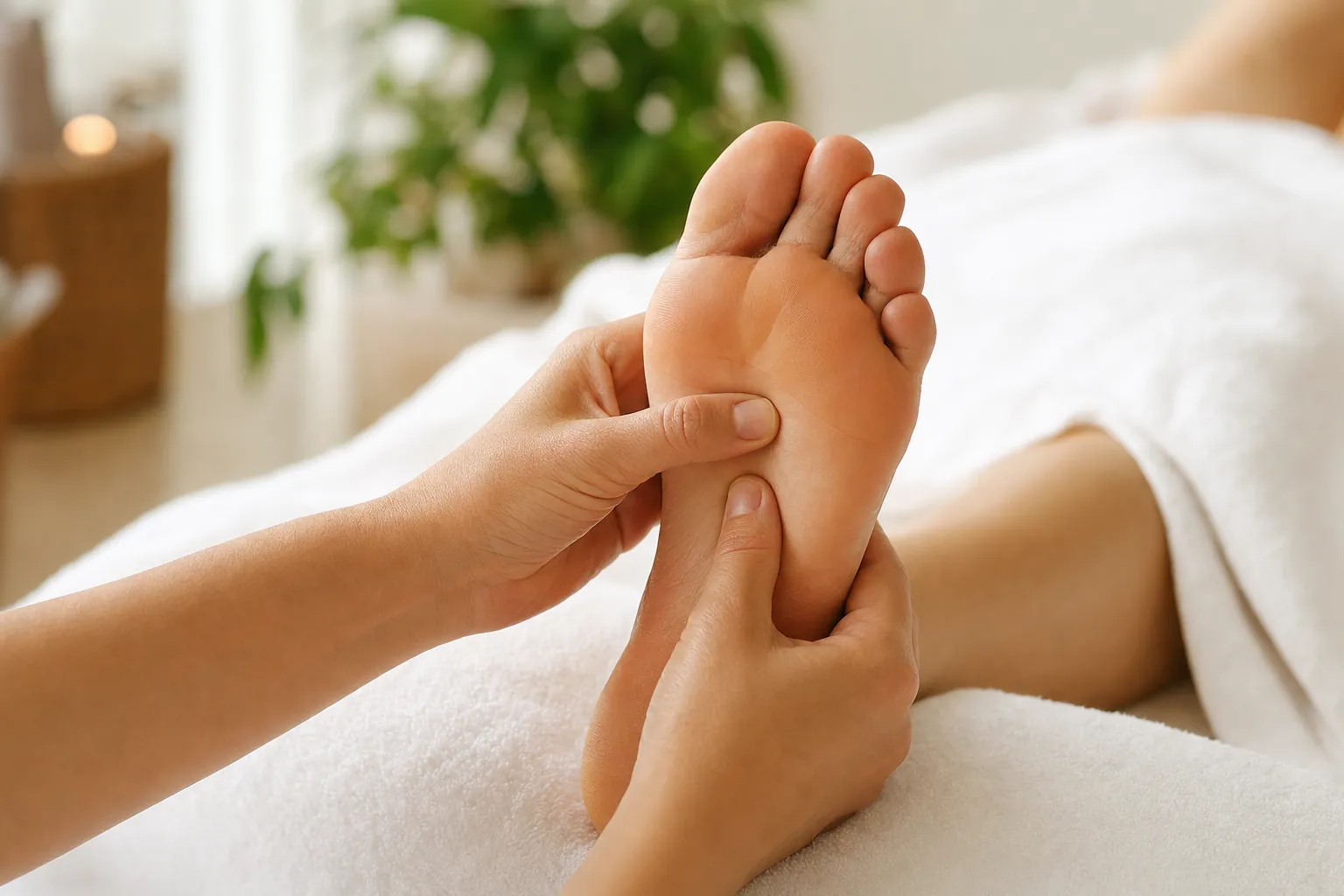
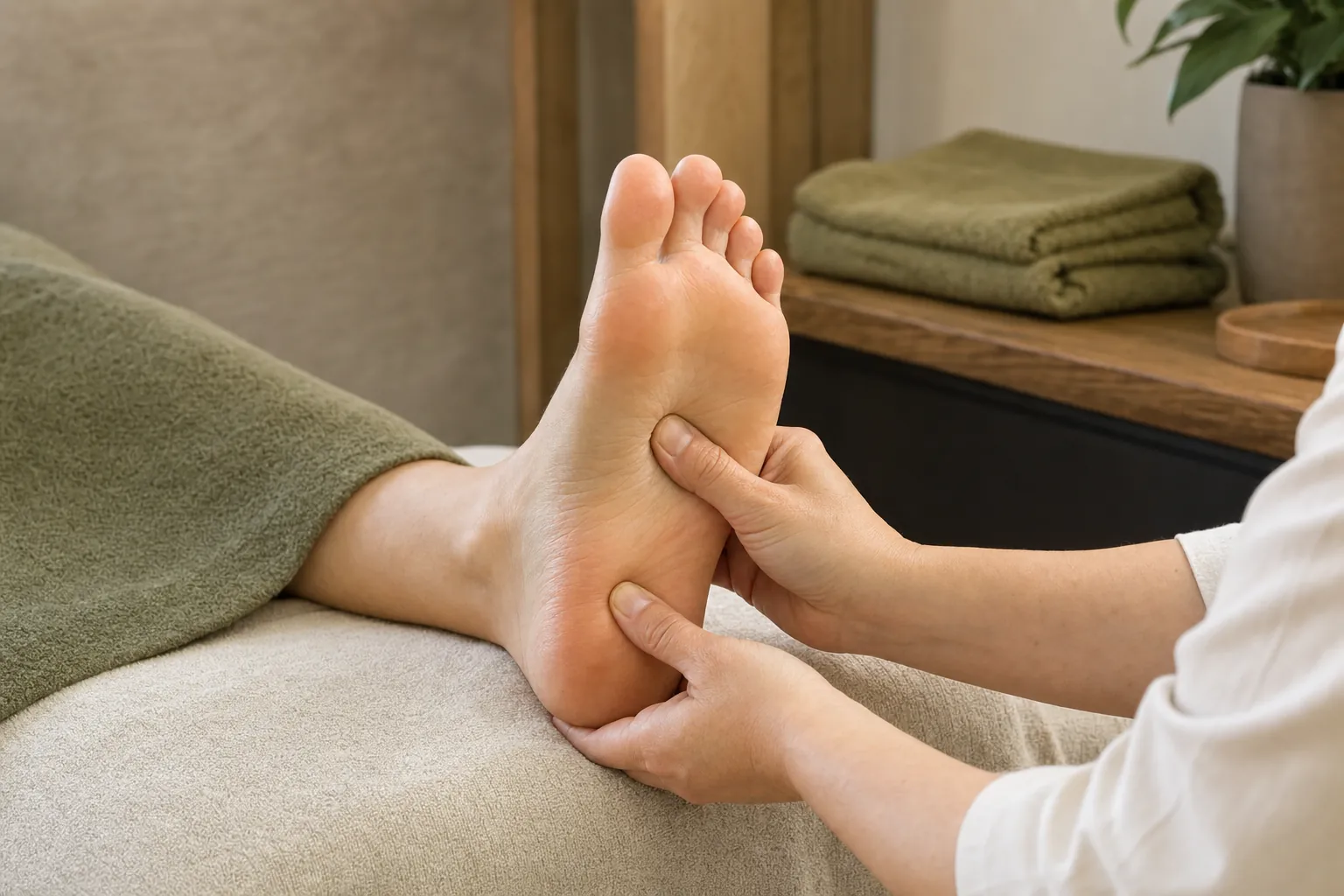
Reflexology is organized around a mapped-point tradition. During a session, the practitioner usually works through areas of the foot with thumbs, fingers, and small, repeated pressure techniques. The pacing can feel measured and specific. Rather than moving broadly across the whole foot, the work may pause at the heel, arch, ball of the foot, or toes before moving on.
The National Center for Complementary and Integrative Health describes reflexology as a practice based on the idea that areas of the feet, hands, and ears correspond with other parts of the body. That framework is part of the tradition, but it is not established anatomy and should not be used to diagnose a medical problem.
For the client, the important distinction is experiential. Reflexology often feels more focused than a general foot rub. You may notice careful pressure through small areas of the sole, along the sides of the foot, or near the toes. Some spots can feel tender, especially if your feet are tired or sensitive. Tenderness is useful feedback, not a challenge to endure. Pressure can and should be adjusted.
At Massages by Sierra, reflexology is offered as foot-focused wellness care with clear communication and a pace that can be adapted to your comfort. You can find the current reflexology session details before reaching out.
What makes a foot massage different
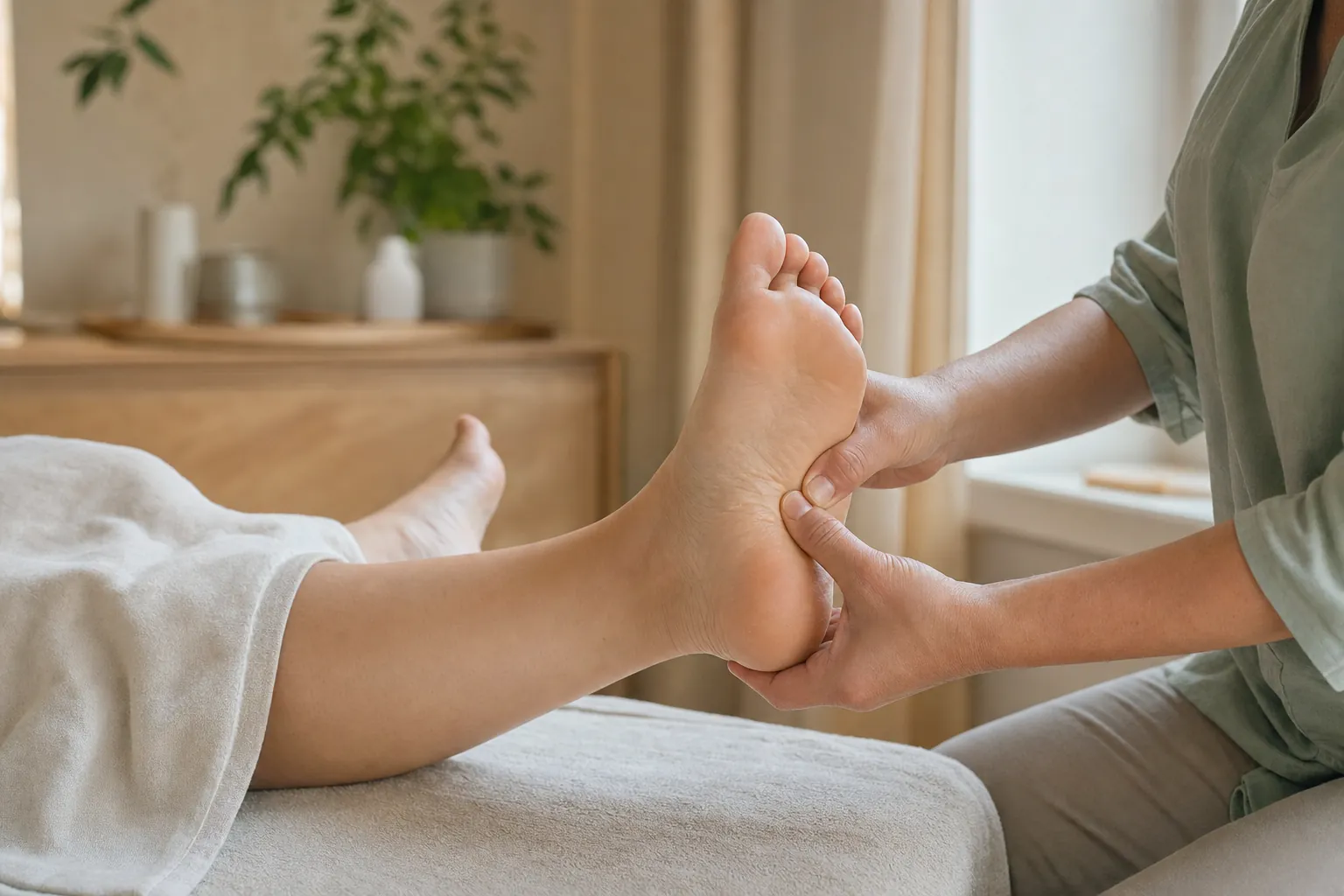
A foot massage is usually less tied to a mapped-point system. The goal is often broad relaxation of the feet, ankles, and sometimes the lower legs. Depending on the style, it may include smooth strokes across the sole, kneading through the arch, gentle work around the heel, or calming pressure around the ankles and calves.
The feeling can be familiar and spacious. Instead of concentrating on one small area at a time, a massage may move more continuously across the foot. That can be especially appealing when you are looking for a general sense of ease after a long day of standing, walking, or wearing shoes that have not been kind to your feet.
A foot massage can also be one part of a larger massage. If your feet are not the only place you want attention, a broader bodywork session may make more sense. The massage and bodywork options at Massages by Sierra are the better place to start when you want to include more of the body in the conversation.

How the session feel can differ
Think of reflexology as more concentrated and foot-specific. The work often has a clear rhythm of press, release, and move. Some people enjoy that focused feeling because it gives their feet dedicated attention without turning the visit into a full-body massage.
Think of a foot massage as more sweeping and relaxation-led. It may feel like a familiar massage scaled down to the feet and lower legs, with broader contact and more flowing movement. People often choose it when they want their feet to be part of a larger wind-down.
Neither needs to be intense to be worthwhile. A session is not more effective because it hurts, and you do not need to “tough it out” if a spot is uncomfortable. The most useful pressure is the pressure that lets you relax while still feeling the kind of attention you came for.
When reflexology may be the better fit
Reflexology can be a practical choice when you know you want your feet to be the center of the appointment. Perhaps you do not want a full-body service that day, you would rather remain clothed, or you simply like the idea of a slower pace with attention moving carefully from one part of the foot to another. The focused format can make the session feel contained and easy to settle into.
It can also fit people who are unsure about broader massage but are comfortable beginning with a smaller area of the body. There is something straightforward about starting at the feet. You can share your comfort level, notice how the pressure feels, and make adjustments without feeling as though you have to commit to an experience that is larger than you wanted.
Reflexology is not a promise that one point on the foot will solve a problem elsewhere in the body. The value is the actual session: dedicated touch, a quieter pace, and a chance to pay attention to what feels comfortable. That is enough reason to choose it. Keeping the expectation grounded makes it easier to enjoy the experience for what it is.
When a broader massage may be the better fit
A broader massage may be the more useful starting point when your feet are only one part of what feels tired. If your shoulders are tense, your lower back is asking for attention, or you would like your legs included along with your feet, a general bodywork appointment gives more room to address the full picture of what you want from your time.
This option can also feel more familiar for people who already enjoy massage. The touch can move between larger muscle groups, and the feet can be included without becoming the entire focus. That may feel more balanced if you want a varied session rather than a concentrated one.
Massages by Sierra lists the current massage and bodywork choices so you can compare the available directions before reaching out. You do not need to make a perfect selection from the page alone. A session request can be the place to explain that you would like broader work but still want your feet included.
What a first reflexology visit usually looks like
A first visit does not need a complicated preparation routine. Start by wearing comfortable clothes and arriving with enough time to settle in. You may remove your shoes and socks, then sit or recline while the work stays centered on your feet. Some people prefer a very quiet appointment. Others want to ask questions first. Both approaches are completely reasonable.
Before the hands-on work begins, it helps to share practical information: whether you prefer light, medium, or firmer pressure; whether one foot is more sensitive than the other; whether you have recently been on your feet all day; and whether there is any area you would rather avoid. You can also mention whether you are cold, whether you would like more support under your legs, or whether you prefer conversation to be minimal. These small details help make the appointment feel like care rather than a preset routine.
Once the session starts, reflexology often moves gradually through the feet. The practitioner may hold the foot, work through the sole with the thumb, pause around the arch or heel, and return to areas that need lighter pressure. You do not need to interpret every movement or know a map of the foot. Your job is simpler: notice what feels comfortable and say something when it does not.
Afterward, there is no special recovery protocol required. Give yourself a few minutes before rushing back into a demanding task, put on comfortable shoes, and pay attention to how you feel. If you have a question about whether reflexology is appropriate for a specific health situation, that is a question for your clinician rather than something to work out through an appointment.
How to compare the two without overthinking it
Start with three simple questions. First, do you want the appointment to stay focused on your feet, or do you want broader work? Second, does slow, deliberate pressure sound appealing, or would you rather have flowing massage strokes? Third, are you looking for a specialized foot-centered experience, or a wider session where the feet are one part of the whole?
If your answers point toward focused, foot-only care and a methodical pace, reflexology is likely the clearer match. If they point toward broader relaxation, lower-leg work, or attention beyond the feet, a massage may be more useful. There is no need to choose based on what sounds more impressive. The best choice is the one you can describe honestly when you book.
It can help to remove the pressure to get it right on the first try. Wellness appointments are not a personality test. A person may prefer reflexology one month and want a broader massage another month. Your needs can change with your schedule, how much time you have been on your feet, your stress level, and the kind of attention that sounds welcome that day.
What reflexology is not
Reflexology is not a medical exam, even when a point on the foot feels especially tender. A practitioner should not use that tenderness to diagnose an organ problem, predict an illness, or tell you that a particular area of the body needs treatment. If you are worried about a symptom, a clinician is the right person to assess it.
It is also not a replacement for care that has been recommended by your medical team. If you are managing a condition, recovering from an injury, or receiving active treatment, ask your care team what makes sense for you. A thoughtful wellness appointment works alongside good medical judgment. It does not ask you to choose one over the other.
Finally, reflexology does not need a dramatic promise to be worthwhile. The ordinary benefits of making room for calm, receiving focused touch, and having a session shaped around your comfort are meaningful on their own. That is a more honest reason to book than a claim that cannot be supported.
A note about pressure and sensitivity
Many people assume foot-focused work must be firm to count. It does not. Feet can be sensitive for many ordinary reasons, including long days in shoes, recent activity, dry skin, an old sore spot, or simply personal preference. Lighter pressure can still feel attentive and effective as part of a calming wellness appointment.
The same goes for tender areas. A tender spot is not a message your practitioner needs to decode, and it is not proof that something is wrong somewhere else in your body. It may simply be an area that feels sensitive today. Letting the practitioner know gives them useful information about how to continue, slow down, or move to a different area.
Clear feedback is especially important in a first session. You can give it in the moment, in plain language, without apologizing. “That is too much pressure,” “this foot is sensitive today,” and “can we spend less time there?” are all enough. The goal is a comfortable session you would feel good about repeating, not an endurance exercise.
Choose based on what you want from your time
Start with the shape of the session you want, not a promise about outcomes. Reflexology may be a good fit when you want:
- Dedicated attention on your feet
- A slower, more deliberate pressure style
- A quiet session that can stay focused on one area of the body
- Clear options to adjust pressure as you go
A broader massage may make more sense when you want your feet included alongside your back, shoulders, legs, or other areas. It can also be a better starting point if you are new to massage and want a familiar, whole-body direction rather than a specialized foot-focused session.
It is completely reasonable to be undecided. You do not have to know the exact service name before you reach out. Share what your body feels like today, what level of pressure you enjoy, and whether you want a foot-centered session or wider bodywork. That gives the conversation a useful starting point.

Questions worth asking yourself first
You can make the choice easier by thinking about what would feel most supportive at the end of a normal day. Are your feet the place you most want attention, or are they only one part of a larger feeling of tension? Would a quiet, contained appointment help you settle, or would you rather have broader massage work through several areas?
It also helps to consider your comfort with touch. Some people like clear, focused pressure on small areas. Others relax more easily when the touch is broad and flowing. Neither preference says anything about your tolerance or commitment. It simply gives you a useful language for choosing a session that is more likely to feel good from the beginning.
If your answer changes after your first appointment, that is useful information too. The goal is not to keep choosing the same thing. The goal is to notice what kind of care leaves you feeling most comfortable, then use that information when you plan your next visit.
There is no prize for choosing the most specialized option. A straightforward, comfortable session is usually more valuable than a service that sounds impressive but does not match what you actually want from your time.
What to say before your appointment
A few plain details can make the first session feel easier. Let the practitioner know if your feet are especially sensitive, if you spend long days standing, if a certain area feels tender, or if you prefer gentle touch. You can also say that you want to avoid a particular area or that you are hoping for a quieter, lower-stimulation appointment.
Be direct about anything that could change how your feet should be handled. An open wound, recent fracture, active gout, vascular condition, concern about blood clots, severe swelling, or a new unexplained symptom is a reason to pause and speak with a clinician first. The same is true if you have diabetes-related foot concerns, neuropathy, are pregnant, or are receiving active medical treatment. These are not details to minimize in order to keep an appointment.
Once the session starts, keep speaking up. “A little lighter,” “that area is tender today,” or “I would like more time there” are all useful directions. Your comfort is part of the session, not an interruption to it.
How Massages by Sierra can help you choose
Massages by Sierra offers reflexology for people who want focused attention on their feet in a private, calm setting. The goal is not to make oversized health promises. It is to offer a considered wellness experience, clear communication, and pressure that can be adjusted around how you feel that day.
If you are leaning toward reflexology, visit the reflexology massage page for a fuller picture of the service. If you want to talk through broader massage and bodywork options, start with the services page or request a session and share what you have in mind.
Frequently asked questions
Questions before you book
Is reflexology better than a foot massage?
Neither is automatically better. Reflexology is a good match for someone who wants a more deliberate, point-by-point foot-focused session. A foot massage may suit someone who wants broader kneading and relaxation around the feet and lower legs.
Does a reflexology appointment include a full-body massage?
Not usually. Reflexology is generally centered on the feet and may sometimes include the hands or ears. If you want attention on your back, shoulders, or legs as well, a broader massage service may be the more natural choice.
Should reflexology pressure hurt?
Sharp pain is not the goal. Some areas can feel tender, but you should be able to ask for lighter pressure at any time. A good appointment makes room for clear feedback rather than asking you to push through discomfort.
Can I book reflexology if my feet are sensitive?
You can start by sharing that concern before the session. Sensitivity, recent discomfort, and pressure preferences are all useful information. In some situations, such as an active injury or open wound, it is wiser to wait or check with a clinician first.
How do I choose before I book?
Choose by the kind of touch and attention you want. If quiet, concentrated care around your feet sounds most restorative, reflexology may fit. If you want a wider massage experience, begin with the broader bodywork options and share your preferences when you request a session.