Reflexology is a form of complementary wellness care that uses focused pressure on specific points of the feet, hands, or ears. It is often chosen by people who want a quiet, foot-focused session, but it is also surrounded by bigger claims than the evidence supports. Knowing the difference helps you decide whether it fits what you are looking for.
What is reflexology, exactly?
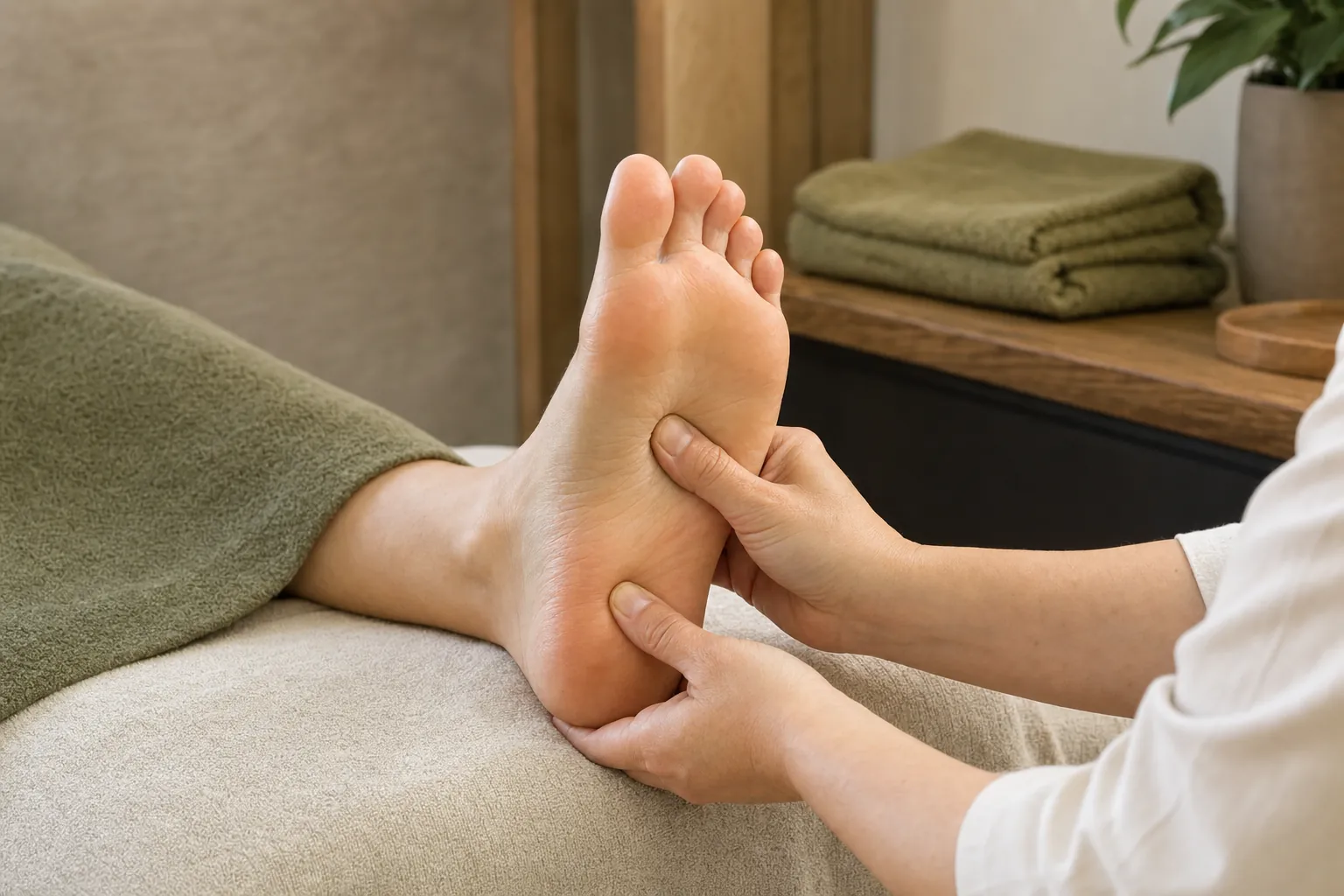
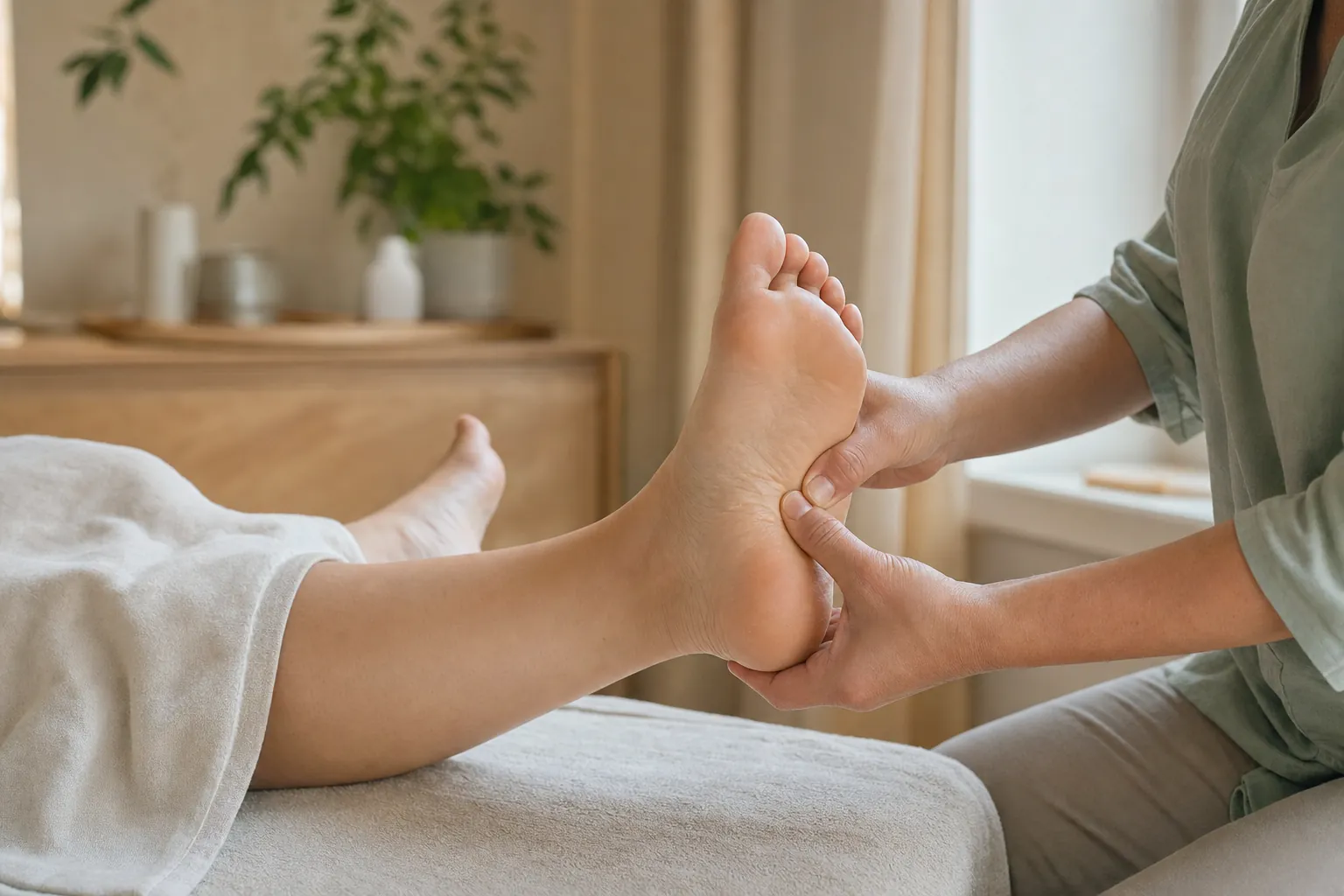
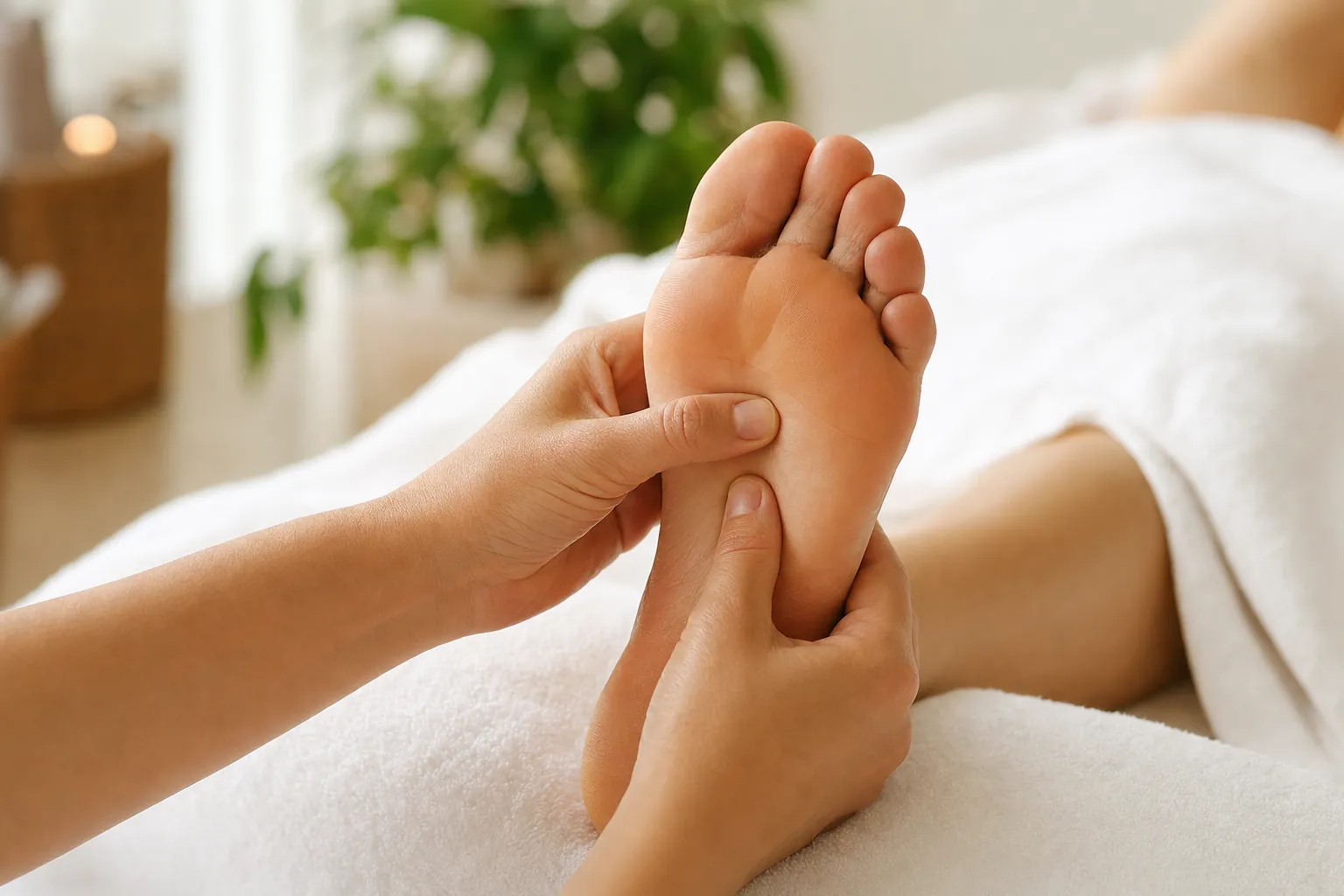
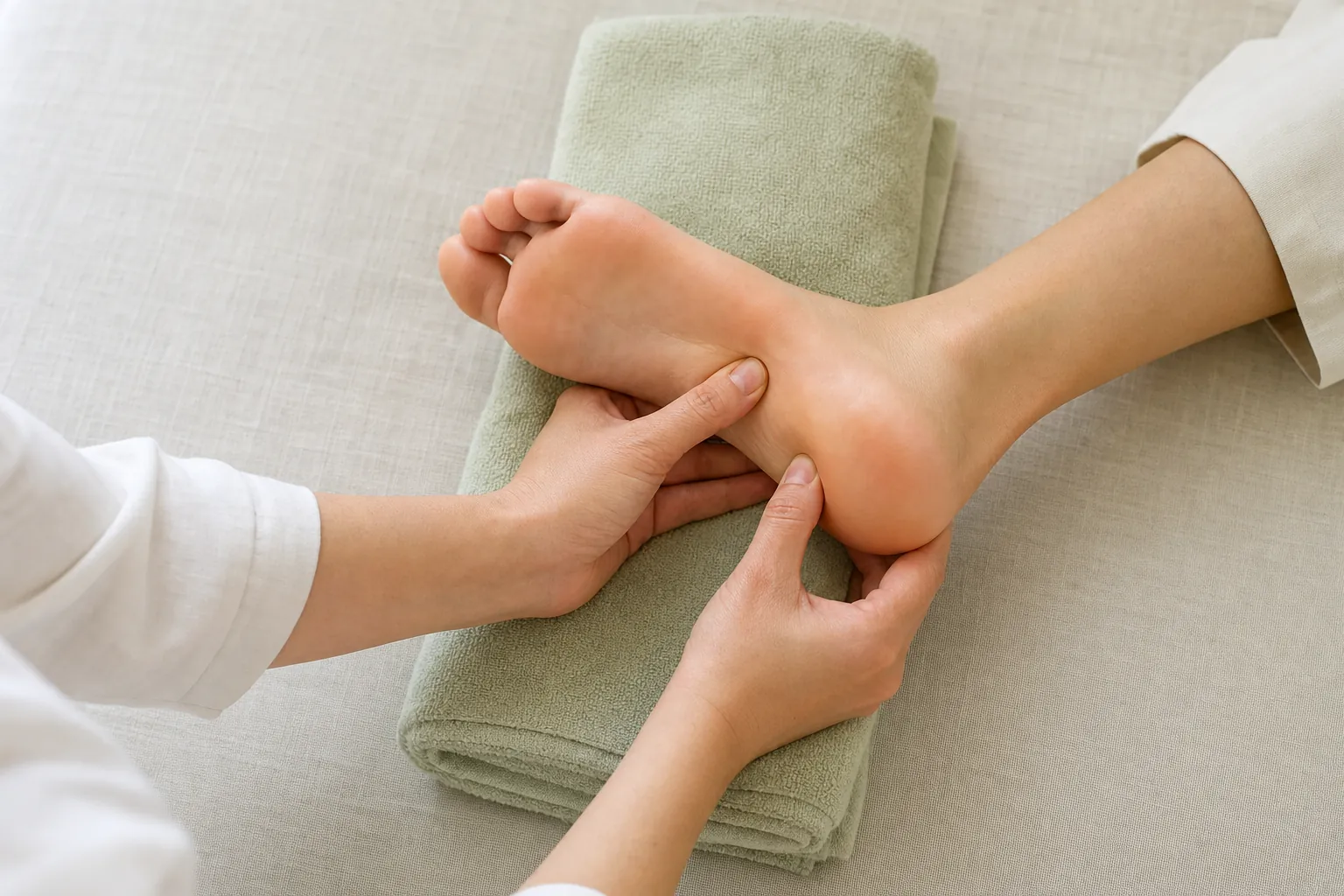
In a reflexology session, a practitioner uses thumbs, fingers, and hands to apply measured pressure to selected areas of the feet or hands. According to the National Center for Complementary and Integrative Health, reflexology is based on the idea that points on the feet, hands, and ears connect to other parts of the body.
That mapped-point idea is part of reflexology practice, not established anatomy. You may see charts that assign an area of the foot to a body part, but those charts should not be treated as a diagnostic tool. A reflexology session can be a comfortable, attentive form of touch without promising to identify a health problem or solve one.
For someone new to it, the simplest way to think about reflexology is this: it is a structured, pressure-based foot or hand service. Some people enjoy it for the chance to slow down and receive focused care. Others like it as an addition to the broader massage and bodywork options they are already considering.
What happens in a reflexology session?
A first session usually begins with a short conversation. You can share whether you prefer lighter or firmer pressure, whether your feet are especially sensitive, and whether there is anything a practitioner should know before beginning. You will usually remove your shoes and socks, then sit or recline comfortably while the work stays focused on your feet. In some settings, reflexology may also include the hands or ears.
The touch is more deliberate than a casual foot rub. A practitioner may hold the foot steady, use small thumb movements across the sole, press and release around the heel or arch, and move carefully through the toes. The rhythm can be slow and specific. If a point feels too tender, say so. Comfort is useful feedback, not something you need to push through.
At Massages by Sierra, the most useful starting point is an honest conversation about what feels comfortable for you that day. A session can be adapted around pressure preferences and the level of touch that helps you settle in.
Reflexology vs. foot massage: what is the difference?
There is overlap, but the intention is different. A foot massage generally uses broad strokes, kneading, and relaxation-focused touch across the feet and lower legs. It can be part of a full-body massage or a standalone treatment. Reflexology uses a more point-by-point approach and follows its own mapped-point framework.
Neither approach needs to be framed as better. The better choice is the one that matches your preference. If you want a familiar massage experience, review the available bodywork sessions. If you like the idea of careful, foot-focused pressure and a slower pace, reflexology may be a good fit to discuss when you request a session.
It is also worth keeping the expectations realistic. Foot massage and reflexology can both feel soothing, but feeling relaxed after touch is different from treating a medical condition. That distinction protects you from overly confident claims and keeps the decision focused on what the service can genuinely offer.
How is reflexology said to work?
Reflexology traditions propose that pressure on particular points may influence corresponding areas elsewhere in the body. That is why reflexology charts and point maps are common. The proposed mechanism has not been proven, and it should not be presented as a substitute for a medical assessment.
The research picture is limited. The NCCIH overview of reflexology notes that there is not convincing evidence that reflexology is an effective treatment for any medical condition. Its information for health professionals also describes limited research into certain symptom-support settings during cancer treatment, which is very different from claiming that reflexology treats cancer or replaces oncology care.
That careful language matters. A person can enjoy a session, feel cared for, and make space to rest without being asked to believe that pressure on a foot point can cure an illness. The most trustworthy version of reflexology is one that is clear about that boundary.
Why do people book reflexology?
People arrive for many ordinary reasons: they want a break from being on their feet, prefer foot-focused touch, enjoy a quieter kind of appointment, or simply want a moment without screens and demands. Some clients like the focused attention because it feels less overwhelming than a full-body service. Others choose it because they already know that care around their feet helps them unwind.
Those are valid wellness reasons. It is better to describe the potential experience than to promise an outcome. You may find a session relaxing. You may prefer a different pressure level than expected. You may decide that a broader massage is a better match next time. The point is to notice what supports your comfort, not to chase a miracle claim.
It can help to choose by the kind of attention you want, rather than by a body-map claim. A person who wants slow, concentrated work around the feet may enjoy reflexology. Someone who wants their shoulders, back, or legs included may prefer a massage session. You can also begin with a question instead of a firm decision. A brief conversation before booking can make the first appointment feel much less uncertain.
For a fuller look at the kinds of services offered, visit the services page. It lays out the current options so you can begin with what sounds most familiar.
When should you pause or check with a clinician first?
Tell your practitioner about anything that changes how your feet should be handled. It is wise to ask a clinician first, or postpone foot work, if you have a fracture, unhealed wound, active gout, vascular disease, or concerns about blood clots. The University of Minnesota's reflexology safety guidance also identifies these situations as reasons to use caution.
Pregnancy, diabetes-related foot concerns, neuropathy, and active medical treatment are also good reasons to check with your care team and to be very direct about your health history. That is not meant to make reflexology feel intimidating. It is simply the same common sense you would use before any pressure-based wellness service.
A practitioner should welcome that information, adjust the session when appropriate, or recommend waiting when hands-on foot work is not the right choice. You never need to downplay pain, numbness, swelling, or a recent injury to keep an appointment.
How to prepare for your first appointment
Keep it simple. Wear comfortable clothes, arrive a few minutes early, and be ready to share your pressure preference. You do not need special shoes or a complicated routine. If you have questions about availability, session details, or whether reflexology is the right direction, use the contact page before your visit.
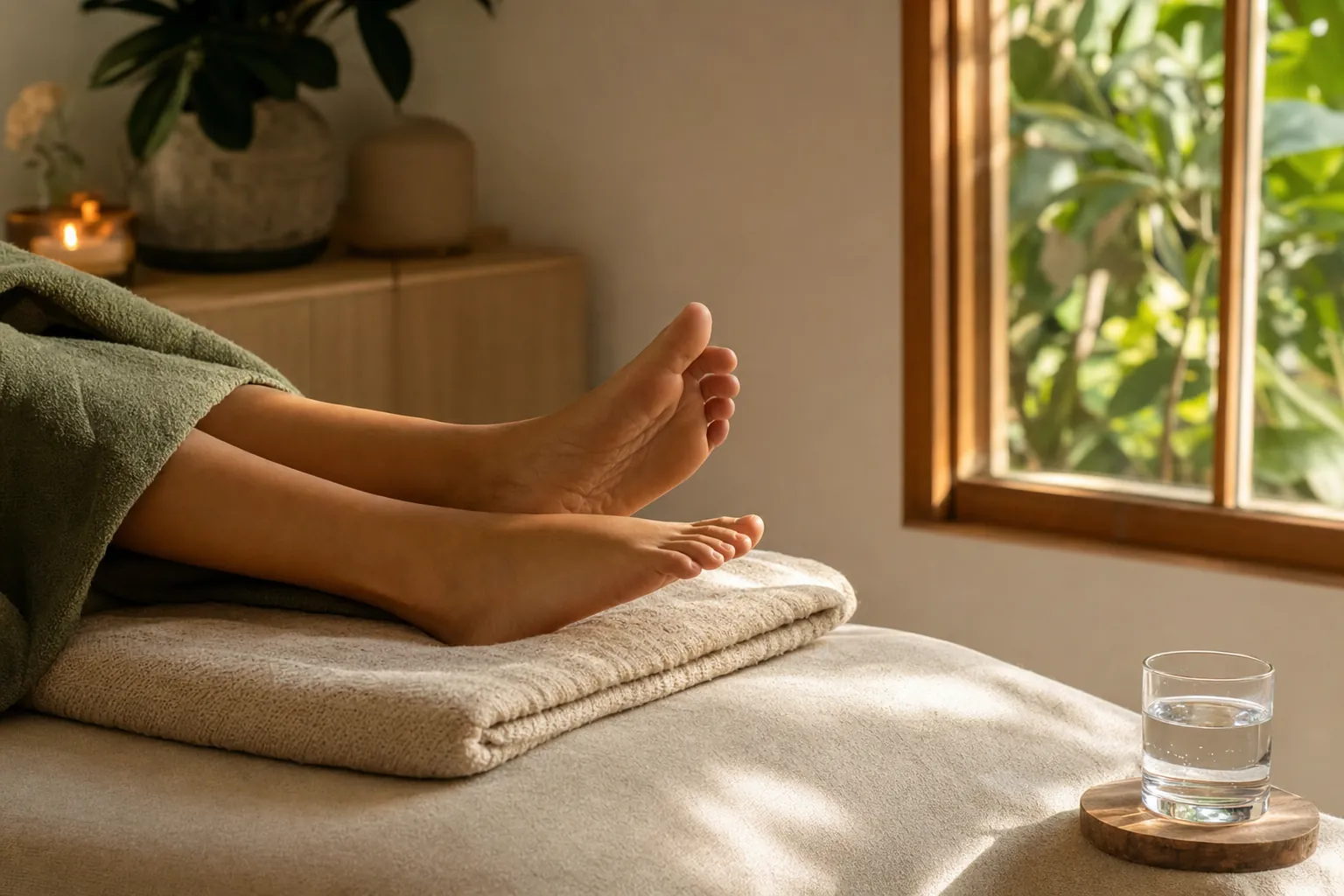
During the session, speak up early if you want a change. “A little lighter,” “more time on this area,” and “my feet are sensitive today” are all useful requests. Afterward, give yourself a few quiet minutes before rushing into the next task. A glass of water, comfortable shoes, and a little space to notice how you feel are usually enough.
How Massages by Sierra approaches reflexology
Reflexology at Massages by Sierra is an invitation to slow down with foot-focused care, clear communication, and pressure that feels right for you. It is not positioned as a medical treatment. Instead, the focus is on a private, attentive experience that can meet you where you are on the day of your appointment.
If that sounds like the kind of session you need, explore reflexology and other bodywork options, then request a session with any preferences or questions you would like to share.
Frequently asked questions
Questions before you book
Is reflexology the same as a foot massage?
Not quite. Both involve touch and pressure on the feet, but reflexology is organized around a mapped-point framework. A foot massage may use broad strokes and kneading without following that framework.
Does reflexology hurt?
It should not feel sharply painful. Some points can feel tender, but a good session leaves room for feedback so the pressure can be adjusted to a comfortable level.
What should I wear to a reflexology appointment?
Wear something comfortable. Because the work is focused on the feet, you can usually remain clothed, with shoes and socks removed for the session.
Who should check with a clinician before booking?
It is sensible to check first if you have a foot injury, open wound, active gout, a vascular condition, blood-clot concerns, are pregnant, or are receiving active medical treatment.
Can reflexology replace medical care?
No. Reflexology is a complementary wellness service, not a way to diagnose, treat, or replace care for a medical condition.